Leave Your Message
Quality, Compliance, and Market Growth: What B2B Buyers Need to Know About Supplement Manufacturing in 2026
News

Quality, Compliance, and Market Growth: What B2B Buyers Need to Know About Supplement Manufacturing in 2026

2026-07-07
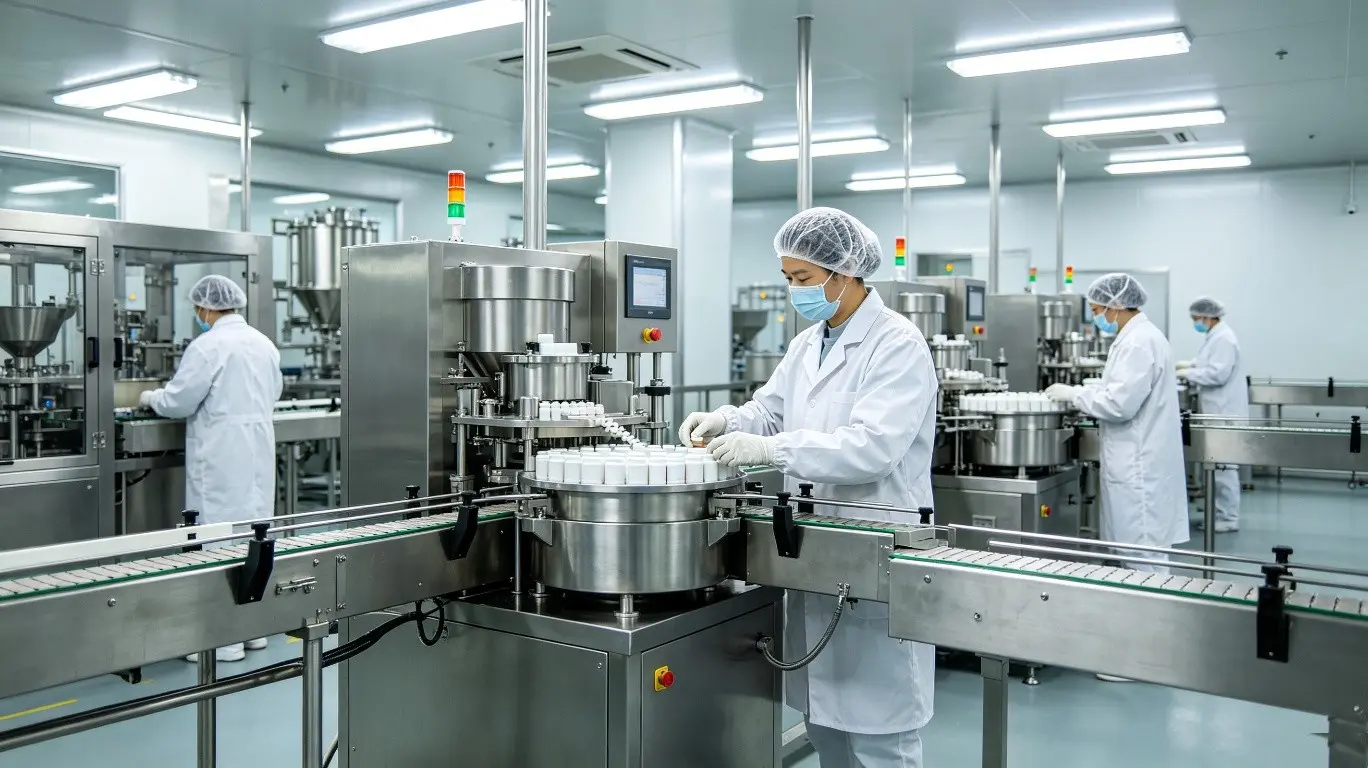
gmp-supplement-facility

The dietary supplement industry in the United States has grown into a significant economic force. According to the Council for Responsible Nutrition (CRN), the sector contributed an estimated $158.6 billion to the U.S. economy in 2023, up 23% from the $121.6 billion recorded in 2016. Tax revenue from supplement companies exceeded $20 billion that same year, while direct wages paid to industry employees surpassed $19 billion. These numbers reflect an industry that has matured rapidly over the past decade.
For B2B buyers — brand owners, private label retailers, and distribution partners — understanding the regulatory framework and quality standards that underpin this growth is essential. The market is not just getting larger; it is getting more demanding. A 2023 CRN consumer survey found that 74% of American adults regularly use dietary Supplements, and that level of mainstream adoption puts pressure on manufacturers to maintain consistent quality across every batch.

The Regulatory Framework: 21 CFR Part 111

At the federal level, dietary supplement manufacturers in the United States operate under the Current Good Manufacturing Practice (CGMP) regulations codified in 21 CFR Part 111. These rules, enforced by the Food and Drug Administration, establish requirements for the manufacturing, packaging, labeling, and storage of dietary supplements. They cover the entire production chain — from raw material receiving and identity testing through finished product release.
The regulation was introduced in 2007 with a multi-year phase-in schedule that gave large companies three years and small companies four years to come into full compliance. Today, 21 CFR Part 111 remains the baseline legal standard for any supplement sold in the U.S. market. The FDA inspects manufacturing facilities on a risk-based schedule, and non-compliance can result in warning letters, import alerts, or seizure actions.
It is worth noting what the regulation does not do. The FDA does not pre-approve dietary supplements or their labels before they go to market, unlike the drug approval process. Under the FD&C Act, manufacturers bear the responsibility for ensuring their products are safe, properly labeled, and compliant with CGMPs before distribution. This self-policing structure makes a manufacturer's internal quality systems the real first line of defense.

"The FDA does not pre-approve dietary supplements. Manufacturers bear the full responsibility for safety and compliance before products reach the market."

— FDA, 21 CFR Part 111: Current Good Manufacturing Practice for Dietary Supplements

Beyond the Baseline: Third-Party Certification


Federal CGMP compliance is mandatory, but many B2B buyers now look for voluntary third-party certifications as an additional layer of assurance. Two programs carry significant weight in the industry.

USP Dietary Supplement Verification
The United States Pharmacopeia operates a verification program that evaluates both finished dietary supplements and individual ingredients. Products that pass USP review are tested for purity, potency, and contaminant limits, and the facility undergoes an on-site audit. Manufacturers that earn USP verification can display the USP Verified Mark on product labels, signaling to buyers that the product meets independently verified specifications.
NSF International Certification
NSF International runs a dietary supplement certification program that includes product testing, facility audits, and label claim review. NSF certification is particularly common among sports nutrition products because the program includes screening for substances prohibited by major athletic organizations. For B2B buyers sourcing products for a broad consumer base, NSF certification provides practical evidence that a manufacturer has robust quality systems in place.
Both USP and NSF programs are voluntary. A manufacturer can be fully compliant with FDA regulations without holding either certification. But in practice, these credentials function as a shorthand for quality that procurement teams rely on when evaluating new supply partners.
Key verification programs used by U.S. supplement manufacturers:
•  FDA CGMP (21 CFR Part 111) — Mandatory federal regulation covering production and quality control
•  USP Verification — Voluntary program testing finished products and ingredients for purity and potency
•  NSF Certification — Voluntary program with product testing, facility audits, and prohibited substance screening
•  ISO 9001 — Quality management system standard, commonly adopted by contract manufacturers

Market Trends Driving B2B Demand


Three structural trends are reshaping what B2B buyers expect from their manufacturing partners.

First, the format shift toward gummies and chewables
Gummy supplements appeal to consumers who find tablets or capsules difficult to swallow, and they have become a standard delivery format for multivitamins, Melatonin, and CBD products. For manufacturers, gummy production requires different equipment and process controls than traditional tableting — gelatin or pectin mixing, starch molding, controlled drying, and careful moisture management. B2B buyers evaluating gummy manufacturing partners should look for dedicated production lines and validated stability data, not just general manufacturing capability.
Second, ingredient-specific demand continues to drive category growth.
Coenzyme Q10 (CoQ10), an antioxidant compound naturally produced by the body, is one of the most widely used supplement ingredients in the cardiovascular health category. According to the NIH Office of Dietary Supplements, CoQ10 is involved in energy production within cell mitochondria and has been studied for its potential role in managing heart failure, migraine headaches, and statin-related muscle pain. The ingredient's popularity in the U.S. market has made it a staple product for many contract manufacturers, but quality varies significantly between suppliers. The NIH notes that CoQ10 Supplements are available in two forms — ubiquinone and ubiquinol — and that absorption can be influenced by formulation and the presence of fats in a meal.
Third, supply chain transparency has become a procurement requirement rather than a differentiator.
The FDA's CGMP regulations already require manufacturers to establish specifications for incoming raw materials, conduct identity testing, and maintain complete production records. But large retailers and distributors are increasingly demanding more. Some require full disclosure of all ingredient sources, third-party lab test results for every batch, and documented chain-of-custody from raw material supplier through finished product. The push comes partly from the Food Safety Modernization Act, which shifted the regulatory focus from reactive contamination response to preventive controls. Manufacturers who cannot provide batch-level traceability may find themselves excluded from major retail and distribution channels.

quality-control-lab-testing

What B2B Buyers Should Ask Prospective Manufacturers


Based on the regulatory and quality landscape described above, B2B buyers evaluating supplement manufacturing partners should be prepared to ask specific, verifiable questions:

CGMP compliance verification.
Ask for the facility's most recent FDA inspection results, including any Form 483 observations or warning letters. A clean inspection record is more meaningful than a generic claim of "FDA registered." Under 21 CFR Part 111, all facilities manufacturing dietary supplements for the U.S. market must be in compliance — there is no registration exemption for contract manufacturers.
Ingredient sourcing and testing.
Request documentation of raw material supplier qualifications, identity test results, and any certificate of analysis from accredited third-party laboratories. The CGMP rule requires identity testing for all incoming dietary ingredients, but the rigor of the testing program varies between manufacturers.
Certification status.
While not required by law, USP or NSF certification provides independent verification of a manufacturer's quality systems. If a manufacturer holds neither, ask what alternative quality assurance measures they have in place.
Traceability systems.
Confirm that the manufacturer can trace every batch of finished product back to its specific raw material lots. This capability is essential for any recall or quality investigation scenario.

"74% of American adults regularly use dietary supplements. That level of mainstream adoption puts pressure on manufacturers to maintain consistent quality across every batch."

— CRN 2023 Consumer Survey on Dietary Supplements

Market Outlook

The U.S. dietary supplement industry shows no sign of slowing. CRN's economic impact data demonstrates that the sector has grown substantially even when measured against a 2016 baseline that already reflected a mature market. Consumer adoption rates remain high, with three out of four American adults reporting regular supplement use. For B2B buyers, this creates both opportunity and obligation: opportunity in a large and growing addressable market, and obligation to select manufacturing partners who take quality and compliance seriously.
The manufacturers that will thrive in this environment are those that treat CGMP compliance as a floor rather than a ceiling, invest in third-party verification programs, and maintain transparent supply chain documentation. Buyers who evaluate partners against these criteria are better positioned to build products that meet retailer requirements and consumer expectations alike.
Related articles:
FDA CGMP Requirements for Dietary Supplements: A Practical Guide for Manufacturers
CoQ10 as a Finished Dose Form: Formulation Considerations for Contract Manufacturing
Third-Party Certification Programs in the Supplement Industry: USP vs. NSF
Supply Chain Traceability in Dietary Supplement Production
Gummy Supplement Manufacturing: Equipment, Process Control, and Stability Testing

Sources

1. Council for Responsible Nutrition. Economic Impact Study: Dietary Supplement Companies Pump More Than $158 Billion into U.S. Economy. January 2024. (crnusa.org)

2. Council for Responsible Nutrition. 2023 CRN Consumer Survey on Dietary Supplements. 74% of U.S. adults report regular supplement use.

3. U.S. Food and Drug Administration. Current Good Manufacturing Practices (CGMPs) for Food and Dietary Supplements. 21 CFR Part 111. (fda.gov)

4. United States Pharmacopeia (USP). Dietary Supplement Verification Program. (usp.org)

5. NSF International. Dietary Supplement Certification Program.

6. NIH Office of Dietary Supplements. Coenzyme Q10 Fact Sheet for Health Professionals. Updated 2026. (ods.od.nih.gov)

This article is based on publicly available data from the Council for Responsible Nutrition, U.S. Food and Drug Administration, National Institutes of Health, United States Pharmacopeia, and NSF International. For informational purposes only.

description2