What Is Maca Root Powder Used For?
Maca Root Powder comes from the dried root of Lepidium meyenii, a plant traditionally grown in Peru’s Andes. Today, people stir it into smoothies, porridge, or warm drinks, often seeking support for energy, sexual well-being, or menopausal symptoms. These uses are not equally supported by research. That distinction matters.
Industry reports help explain why maca appears in so many products. Grand View Research’s maca-root market analysis tracks commercial demand across product and application categories; market growth, however, cannot prove health benefits. Clinical evidence remains limited. A systematic review of maca for menopausal symptoms found that the available studies were too few and methodologically weak for firm conclusions. Small human trials have also examined sexual desire, but their findings should not be treated as guarantees. The powder in a kitchen jar may look simple; its effects can vary, and product quality may differ.
Peruvian researcher Gustavo F. Gonzales and colleagues wrote, “Maca has been traditionally used as a food and medicine in the Peruvian Andes” in a 2002 paper in Andrologia. That quotation describes traditional use, not proof of every modern supplement claim. In this guide, we will look at what Maca Root Powder is used for, what research supports, and where uncertainty remains. A cautious reading is useful. People taking medication, managing a health condition, or considering maca during pregnancy should seek advice from a qualified health professional.
What Maca Root Powder Is and Where It Comes From
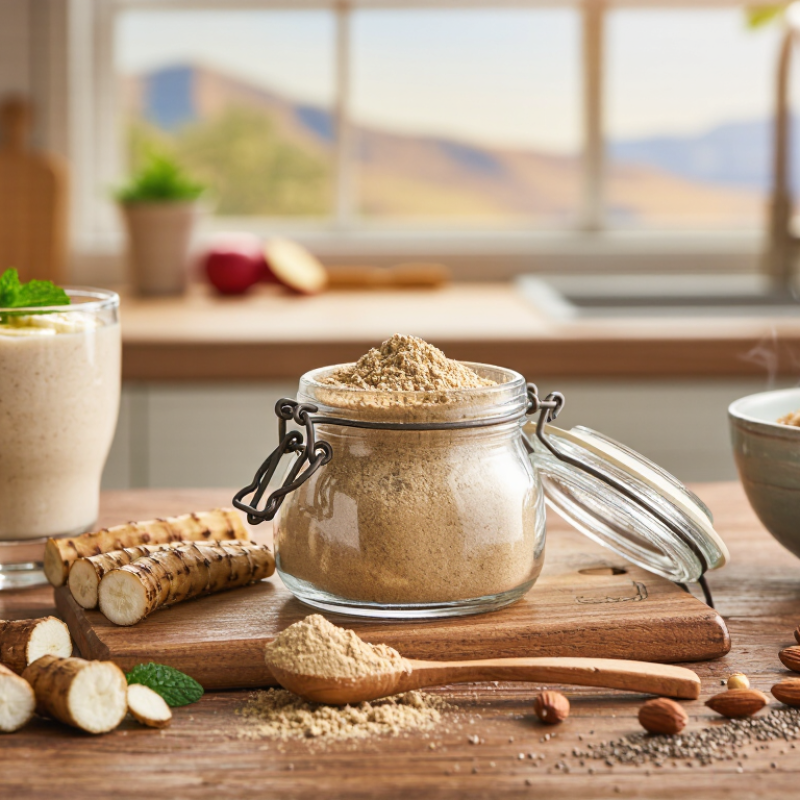
Maca is a high-Andean plant, not a tree root or a laboratory-made extract. Kew’s Plants of the World Online lists its scientific name as Lepidium meyenii and places it in the mustard family. The edible part is often called a root, though it includes the plant’s swollen lower stem. Small and earthy, it can be cream-colored, red, or nearly black.
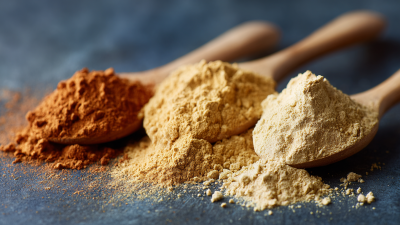
It comes mainly from Peru’s central Andes, where fields sit high above sea level and face cold nights, strong sun, and thin air. Peru’s National Institute of Agricultural Innovation describes maca cultivation at roughly 3,800 to 4,500 meters. That range helps explain why the crop is closely tied to a particular landscape. After harvest, growers dry the underground parts; these are then ground into powder. The powder has a mild, malty taste, sometimes with a faint bitterness. It is mixed into porridge, drinks, or baked foods, and sold as a dietary supplement. “Root powder” is convenient shorthand. Still, it can blur the plant’s anatomy and its food history.
Traditional Uses of Maca in Andean Communities
In Andean communities, maca was a hardy food crop as much as a remedy. The National Research Council’s 1989 report, Lost Crops of the Incas, describes it growing on cold highland plateaus above 4,000 meters. Families harvested the small roots, dried them, and later cooked or ground them into food. Picture a smoky kitchen, a pot of maca porridge, and roots stored for leaner months. Local practices varied, and not every household used maca in the same way.
Traditional accounts also associate maca with stamina and fertility. Those uses matter culturally, but they are not proof of a medical effect. A 2011 systematic review in BMC Complementary and Alternative Medicine assessed four clinical trials involving 131 people. The authors judged the evidence for sexual-function benefits limited. That distinction is easy to overlook. Maca powder today may be sold as a supplement, but Andean tradition often involved the whole root as food. Processing, serving size, and preparation can differ, so modern powders should not be assumed to match historical use exactly. The record is also incomplete; some community knowledge was passed down orally rather than recorded in formal reports.
What Is Maca Root Powder Used For? - Traditional Uses of Maca in Andean Communities
| Traditional context |
How maca was traditionally used |
Community significance |
Important context |
| Everyday nourishment |
The maca root was commonly dried and cooked, then eaten in foods such as porridges or soups. |
It served as a locally grown food in high-altitude areas of the central Peruvian Andes. |
Traditional preparations generally used cooked maca; modern root powder is a processed form. |
| Drinks and prepared foods |
Dried maca could be boiled or mixed into drinks and other cooked preparations. |
Preparing the root made it suitable for sharing and incorporating into household meals. |
Recipes and preparation methods vary among households and communities. |
| Strength and stamina |
Maca was valued as a nourishing food that people associated with strength and energy. |
This use reflects local food traditions and knowledge of a crop adapted to harsh Andean conditions. |
Traditional associations do not establish that maca treats fatigue or improves athletic performance. |
| Fertility and reproductive traditions |
In some Andean traditions, maca was associated with fertility and reproductive vitality. |
These beliefs form part of the cultural history surrounding the crop. |
Traditional use is not proof that maca improves fertility or treats reproductive conditions. |
| Local agriculture and exchange |
Maca was cultivated as a food crop and could be stored after drying; it also formed part of local exchange. |
Its cultivation connects food, livelihoods, and community practices in the Andean highlands. |
Production and use have changed over time, and practices are not identical across all communities. |
Note: This table describes reported traditional food and cultural uses. It is not medical advice, and traditional uses should not be taken as evidence of proven health effects.
Common Modern Uses and Potential Benefits
Maca root powder is commonly used as a food ingredient and dietary supplement. Its earthy, nutty taste blends into oatmeal, yogurt, or a morning smoothie. Some people take it hoping to support energy, sexual desire, or menopausal comfort. These are popular uses, not established medical treatments.
The evidence remains modest. A 2010 systematic review in BMC Complementary and Alternative Medicine examined four randomized trials involving 131 people. The authors found limited evidence for maca’s effects on sexual function, with small studies and inconsistent methods. That number matters. It suggests interest, not proof. The US National Center for Complementary and Integrative Health also notes that research on maca’s health effects is limited.
Maca may not suit everyone. Research on long-term safety is sparse, and supplement powders can vary in composition. People who are pregnant, managing a health condition, or taking medication should ask a qualified health professional before using it. Notice how your body responds, too; stomach discomfort is possible. A warm bowl can make the powder feel like an ordinary food, but that does not guarantee a benefit. This distinction is easy to overlook.
How Maca Root Powder Is Prepared and Consumed
Maca root powder is made from maca roots that are dried and finely milled.
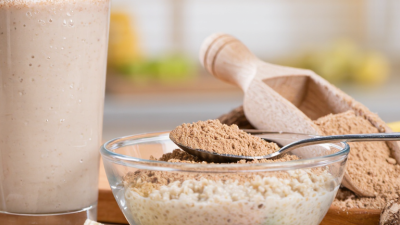
Some products use gelatinized maca, which is heat-processed to reduce starch; it contains no gelatin by definition. Check the package directions, since processing and serving suggestions can differ. The powder has an earthy, malty taste. Stir it slowly into warm porridge, yogurt, or a smoothie to limit clumps. A whisk helps. It can also be mixed into pancake batter or soup, though strong flavors may hide its taste.
People usually consume maca as a food ingredient rather than a medicine. Start with a small amount, such as the package’s suggested serving, and see how its flavor and texture suit you. There is no single amount that is right for everyone, and research does not establish maca powder as a treatment for health conditions. If you have a medical condition, take medication, or are pregnant or breastfeeding, ask a qualified health professional before using it regularly. I would not assume that more powder means better results.
Tips: Keep the pouch sealed in a cool, dry cupboard, and use a clean, dry spoon. Add the powder gradually; a little can change the flavor quickly. If it tastes too strong, reduce the amount next time.
Safety, Side Effects, and Limits of Current Evidence
Maca root powder is often marketed for energy, mood, fertility, or sexual function, but evidence remains limited. A 2010 systematic review in BMC Complementary and Alternative Medicine found just four randomized trials, involving 131 participants. The studies were small and short, so they cannot establish lasting benefits or identify uncommon harms. That matters. A few weeks of use is not a long-term safety test.
Reported side effects in small studies were generally limited, but adverse-event tracking was inconsistent. Mild digestive discomfort or changes in sleep may occur; the available trials cannot estimate how often. People who are pregnant, breastfeeding, taking regular medicines, or managing thyroid or hormone-sensitive conditions should ask a clinician before use. The concern is not proof of harm. It is the lack of dependable data. Supplement powders can also vary in processing and composition, so a scoop at breakfast may not match the preparations used in clinical research.
The review examined specific preparations and doses, not every product sold as maca powder. Its findings should not be treated as a reliable dose guide. Researchers still need larger, longer trials with clear safety reporting and consistent product testing. Until then, claims about maca should be viewed cautiously, especially when they promise a predictable effect.
 +852 54195003