Leave Your Message

China Top Black Maca Suppliers for Global Buyers

China’s role in the Black Maca supply chain deserves careful examination, not assumptions. For global buyers, a supplier’s location alone says little about product quality, traceability, or delivery reliability. The Food and Agriculture Organization’s Food Outlook tracks major food commodity markets, while UN Comtrade and ITC Trade Map help buyers review broader trade flows. However, these sources do not provide a complete, dedicated census of Black Maca suppliers. Product codes and reporting practices can vary. That gap matters.

A sound supplier assessment starts with verifiable details: botanical identification, country and region of origin, processing method, batch-level traceability, and current quality documentation. Ask how the supplier controls moisture, foreign matter, and consistency between shipments. Request specifications and representative test results, then confirm that documents match the product and production site. For food safety, buyers should check applicable destination-market requirements and assess whether the supplier’s controls are independently audited. Certifications can support due diligence, but they do not replace it.

Details matter. A clean sample is not a supply program. This guide examines China-based Black Maca suppliers through practical questions about sourcing, documentation, production capability, and communication. Public market data for this niche remains limited, so comparisons require caution. Some supplier claims may be difficult to verify from public records alone. Buyers should treat that uncertainty honestly, request evidence directly, and avoid choosing on price or promotional language alone.
China Top Black Maca Suppliers for Global Buyers

Black Maca Overview: Peruvian Origin, Root Types, and Supply Forms

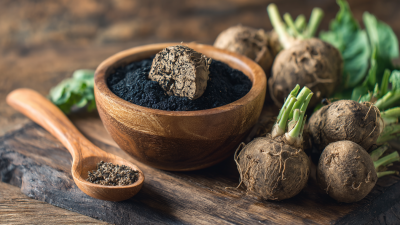
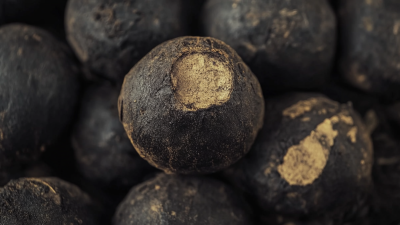
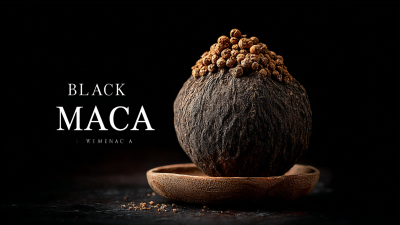
Black maca, or Lepidium meyenii, is a highland crop associated with Peru’s central Andes. A 2012 review in Evidence-Based Complementary and Alternative Medicine places maca cultivation at roughly 4,000–4,500 meters above sea level. That elevation means cold nights, strong sunlight, and thin air are part of its growing environment. Three commonly discussed root color groups are yellow, red, and black. Color is useful for sorting, but it does not prove purity or quality. I would not judge a lot by shade alone.

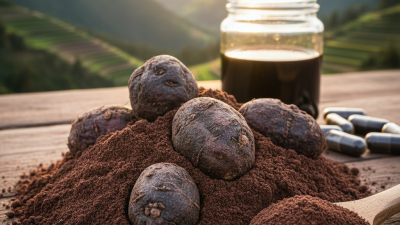
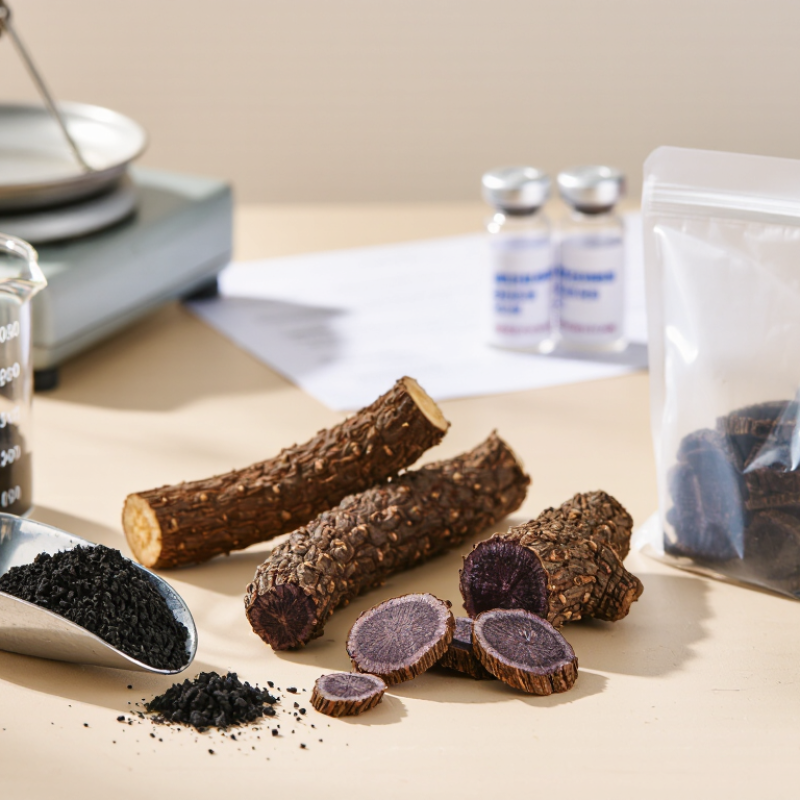
For buyers, black maca is commonly supplied as dried whole roots, cut pieces, powder, or extract. Each form needs different checks. Whole roots make visible inspection easier; powder is convenient, but origin and batch identity become harder to confirm by sight. Ask for the botanical name, country and region of origin, processing details, moisture specification, and a current certificate of analysis. Peru’s agricultural research agency, INIA, has published technical material on maca cultivation and processing; buyers can use such references to frame supplier questions. Small details matter. A dusty powder or mixed root sizes may not signal poor quality by itself, but it deserves a clear explanation and traceable records.
China’s Supplier Landscape: 3 Key Routes from Farm to Export

China’s black maca supply chain generally follows three routes from farm to export. The first connects buyers directly with farms, often in Andean growing regions, through a Chinese sourcing office. This route offers clearer harvest-lot records, but buyers should confirm who actually owns and handles each lot. Ask for the farm location, harvest year, drying method, and a sample linked to its batch documents.

The second route runs through local processors or contract-growing networks. Raw roots may be cleaned, sliced, dried, and milled before export. Request process-flow details and test reports for identity, moisture, heavy metals, and pesticide residues. Check that sample results match the shipment lot. Paperwork can look tidy. The handoff may not be.

The third route uses export consolidators that combine material from several suppliers. This can simplify shipping and provide flexible volumes, yet traceability may weaken when lots are blended. Confirm the declared origin, ingredient form, packing date, and applicable export documents before approving an order. Where material is cultivated in China, request clear evidence of the growing location rather than relying on a broad regional claim. A small detail can change the whole picture. I would treat any gap in batch records as a question to resolve, not a minor inconvenience.

Buyer Specifications: Moisture, Particle Size, and Macamide Testing

For global buyers, a black maca specification should describe the material, not just its headline assay. Moisture limits need agreement before purchase, because storage conditions and intended processing can change what is practical. Ask whether results use a stated drying method and whether the certificate reports moisture on an as-received basis. A dry-looking powder is not proof. Check the number.

Particle size affects blending, filling, and how quickly powder disperses. Request a sieve profile or defined mesh range, rather than a single vague label such as “fine.” For example, a buyer may need most of a lot to pass a specified screen while limiting coarse particles. Confirm the sampling procedure too: a jar taken from the top of one bag may not represent a full shipment. This detail is easy to overlook.

Macamide testing deserves equal care. Specify the analytical method, reference standard, reporting units, and whether results cover individual compounds or a stated total. HPLC-based testing may be useful, but the method should be documented and suitable for the sample matrix. Compare results from representative lot samples, not unrelated batches. Macamide levels can vary with raw material and processing. A specification cannot erase that variation, and buyers should leave room to review outliers rather than treating every number as certainty.

Buyer QC Specifications for Black Maca Powder

Illustrative procurement checks for comparing supplier documentation. Confirm limits and test methods in the purchase contract.

Macamide testing: Request a lot-specific laboratory result on the certificate of analysis, with the analytical method and units stated (for example, HPLC or LC-MS reporting in mg/g). There is no single universal macamide acceptance threshold; define it with the supplier and testing laboratory. The plotted values are example buyer criteria, not universal industry standards.

Supplier Audits: HACCP, ISO 22000, and ISO/IEC 17025

China Top Black Maca Suppliers for Global Buyers

Supplier Audits: HACCP, ISO 22000, and ISO/IEC 17025

For black maca buyers, supplier audits should examine real practices, not just certificates. HACCP records should identify process hazards and show how staff monitor key controls. Ask to see recent monitoring logs and corrective actions. A clean, well-organized production area matters, but records should match what happens on the floor.

ISO 22000 covers a broader food safety management system, including communication, traceability, and response planning. Check whether the certificate applies to the actual processing site and product scope. ISO/IEC 17025 applies to testing laboratories, not suppliers. Confirm that relevant tests, such as identity or contaminant analysis, fall within the lab’s accredited scope. Review sample dates and methods. Even careful audits can miss gaps; paperwork is not the whole picture.

Tips: Request a batch-specific certificate of analysis and traceability records. Compare the lot number on the report with the product documents. If an answer seems vague, ask again in writing. Small inconsistencies deserve a closer look.

Export Compliance: China’s GB 2762 and EU Regulation 2023/915

China Top Black Maca Suppliers for Global Buyers

For black maca buyers, export compliance begins with the exact product form: dried root, powder, or an ingredient blend. China’s GB 2762 sets contaminant limits for foods, while EU Regulation 2023/915 sets maximum levels for certain contaminants in specified food categories. The applicable category matters. Do not assume a limit for one product form automatically applies to another. Check the current rules and confirm the product’s classification with a qualified compliance professional.

A reliable supplier should provide batch-specific test reports, product specifications, origin and processing records, and clear traceability from harvest to shipment. Ask which contaminants were tested and whether the laboratory uses validated methods. Reports should match the lot number on the bags, not just describe a typical batch. A clean result is useful. It is not a guarantee that every shipment will be identical. This detail is easy to overlook.

Tips: Request recent results for lead, cadmium, and other relevant contaminants. Compare the limits against both the Chinese standard and the EU requirements for your intended product category. Keep sealed samples from each shipment. If documents conflict, pause and clarify before ordering. Compliance checks can feel repetitive, but one missed classification can create avoidable delays.

China Top Black Maca Suppliers for Global Buyers - Export Compliance: China’s GB 2762 and EU Regulation 2023/915
Compliance dimension China requirement / reference EU requirement / reference What buyers should verify for black maca Useful records
Applicable contaminant rules GB 2762-2022, National Food Safety Standard: Maximum Levels of Contaminants in Foods. Effective from 30 June 2023. Commission Regulation (EU) 2023/915 on maximum levels for certain contaminants in food. It has applied since 25 May 2023 and is subject to amendments. Confirm the product’s legal food category and intended use in each market. A maca ingredient, a finished powder, and a food supplement may not be assessed under the same category. Product specification; intended-use statement; market-specific classification review.
Lead (Pb) Apply the GB 2762 limit corresponding to the product’s applicable food category. Do not assume a single limit applies to all maca powders. For food supplements, the EU maximum level is 3.0 mg/kg. This figure applies only when the product is legally classified in that category; other food categories may have different limits. Request a lot-specific result in mg/kg and compare it with the limit for the product’s actual category and destination market. Batch certificate of analysis (COA); laboratory report showing method, result, unit, and reporting limit.
Cadmium (Cd) Determine the applicable GB 2762 category before setting a pass/fail criterion; the standard’s limits are category-specific. For food supplements, the EU maximum level is generally 1.0 mg/kg. A 3.0 mg/kg level applies to specified supplement compositions, including products consisting mainly or exclusively of certain dried algae or shellfish products; it is not a general maca allowance. Check that the product composition does not lead to an incorrectly selected EU category. Use the current consolidated regulation when assessing compliance. Ingredient and composition statement; batch COA; documented regulatory category assessment.
Mercury (Hg) and arsenic (As) Check GB 2762 for any limit applicable to the product’s category and form. Do not infer a limit from a different crop or food category. Check Regulation (EU) 2023/915 and its current amendments for a limit applicable to the specific product category and contaminant form. Do not treat a result for total arsenic as an inorganic-arsenic result. Agree in advance whether testing is required by the buyer’s specification, risk assessment, or destination-market rules. Specify the analyte form and test method where relevant. Risk-based test plan; analyte-specific laboratory report; written acceptance criteria.
Sampling and laboratory testing The applicable standard and food category determine the compliance criterion; use a representative sample of the lot being assessed. Use the applicable EU maximum level for the food category and the sampling and analysis rules relevant to official contaminant controls. Match the sample identity to the shipment lot. A laboratory’s ISO/IEC 17025 accreditation should cover the relevant test, where available; accreditation alone does not establish that a product complies. Sampling record; sealed sample identification; laboratory accreditation scope; signed test report.
Supplier and lot traceability Traceability and applicable food-safety obligations depend on the product, operator, and applicable Chinese rules. EU food-business operators must maintain traceability under applicable EU food law. Importers should retain information linking the imported lot to the supplier and product. Evaluate suppliers using verifiable, shipment-specific evidence rather than an unsubstantiated ranking. Confirm origin, lot coding, processing site, and a documented process for handling non-conforming lots. Supplier questionnaire; purchase specification; lot and production records; recall and corrective-action procedure.
Pre-shipment release check Compare the final product and test results with the applicable GB 2762 category and the agreed customer specification. Compare results with the relevant EU category and the current version of Regulation (EU) 2023/915, including applicable amendments. Release only when product identity, intended use, lot number, test results, units, and applicable market limits are consistent. Import documentation and additional controls can vary by destination and product classification. Approved specification; lot COA; invoice and packing list; applicable import and food-safety documents.

Note: This is a buyer’s compliance comparison, not a supplier ranking or legal determination. The numerical EU limits shown apply to the stated food-supplement category only. Confirm the current legal classification and consolidated rules for the specific product and destination before shipment.

References: China GB 2762-2022; Commission Regulation (EU) 2023/915, as amended. Official EU text: EUR-Lex — Regulation (EU) 2023/915.