+852 54195003



- Home
- Products
- About US
- FAQ
- News
- Tips
- Contact Us
Leave Your Message
-
Phone
-
E-mail
-
WhatsApp
-
WA Business

Black Maca is gaining attention among buyers seeking distinctive botanical powders, but supplier selection requires more than a compelling product page. Grand View Research valued the global dietary supplements market at USD 177.5 billion in 2023 and projected a 9.1% compound annual growth rate from 2024 to 2030. That broader trend offers useful context, not a Black Maca market-size estimate. The distinction matters.
For buyers, evidence begins with the batch. A dependable supplier should identify the botanical material, country of origin, processing method, and lot number. Ask for a current certificate of analysis and independent test results covering identity, microbial quality, and relevant contaminants. Organic certification can be useful when verified against the issuing body’s records. The Organic Trade Association reported U.S. organic sales of USD 69.7 billion in 2023, up 3.4% year over year. This reflects wider demand for certified products, not proof that any particular maca powder is better.
The suppliers featured in this 2026 guide should be judged by documentation, consistency, traceability, and clear communication—not marketing claims alone. The category is not perfectly transparent. Public information can be uneven, and supplier statements may be difficult to compare. That is worth acknowledging. Before placing an order, request a recent sample, confirm minimum quantities and lead times, and check whether test documents match the offered lot. These practical checks help buyers compare Black Maca suppliers with greater confidence.
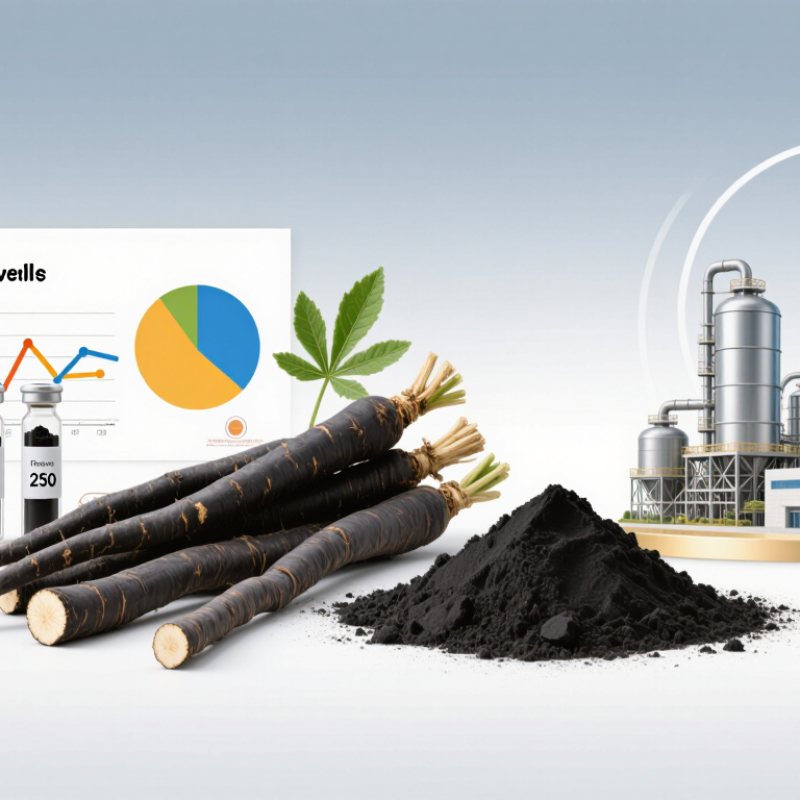
Black maca powder begins as Lepidium meyenii, a root crop grown in Peru’s high Andes. Peru’s National Institute of Agrarian Innovation describes maca cultivation at roughly 3,800–4,500 meters above sea level, where cold nights and strong sunlight shape growing conditions. A 2014 review in Evidence-Based Complementary and Alternative Medicine discusses black, red, and yellow maca as distinct root color types. Black describes the harvested root, not a color added during processing. Color matters.
After harvest, roots are cleaned, dried, and milled into powder. Traditional sun-drying can take weeks, and moisture control is important: poorly dried material may cake or lose quality in storage. Some processors also use heat and water to gelatinize the root, changing its starch structure and texture. These methods are not interchangeable, so buyers should check processing details rather than assume every powder is made alike. The label alone tells little. A credible supplier should be able to provide origin, batch traceability, moisture specifications, and testing for contaminants. Even with documentation, color sorting and drying conditions can vary between harvests; that practical variability is easy to overlook.
| Evaluation Area | What to Know | What to Check with a Supplier |
|---|---|---|
| Product Basics | ||
| Botanical identity | Maca is Lepidium meyenii, a plant in the mustard family (Brassicaceae). “Black maca” refers to a root color type, not a separate botanical species. | Confirm the Latin name and that the product is made from maca hypocotyls (the swollen underground part), rather than an unspecified plant material. |
| Origin | Maca is native to the central Andes of Peru and is traditionally cultivated at high elevations. | Request the country and growing-region details, harvest documentation, and traceability records for the specific lot. |
| Color identity | Maca roots occur in different colors, including black, red, and yellow. Color alone does not establish identity, purity, or nutrient content. | Ask how the black-color type is identified and whether the supplier can connect the identity claim to lot-level records. |
| Typical product form | Black maca powder is generally produced by drying maca hypocotyls and milling them into a powder. Finished color and particle size can vary. | Check the ingredient statement, mesh or particle-size specification, sensory description, and whether carriers or other ingredients are added. |
| How the Powder Is Produced | ||
| Harvest and cleaning | Mature maca plants are harvested, and the underground parts are separated and cleaned before further processing. | Ask for a process-flow description and controls for removing soil and foreign material. |
| Drying | Cleaned maca is dried before milling. Drying method and conditions can affect moisture, color, and other product characteristics. | Request the finished-product moisture specification and the supplier’s drying and storage controls. |
| Raw or gelatinized | “Raw” generally describes powder that has not undergone a gelatinization step. Gelatinized maca is processed with heat and moisture to reduce starch content; it is not the same as adding animal gelatin. | Confirm the processing type, whether heat and moisture are used, and whether the product is clearly labeled as raw or gelatinized. |
| Milling and packing | Dried material is milled and may be sieved before it is packed. Packaging should protect the powder from moisture and contamination. | Review particle-size limits, packaging materials, batch coding, shelf-life basis, and storage instructions. |
| Supplier Selection and Verification | ||
| Supplier type | A supplier may grow and process maca, manufacture powder from purchased raw material, or trade finished ingredients. These roles provide different levels of direct supply-chain visibility. | Ask whether the supplier is a grower, processor, manufacturer, or trader, and identify which operations are subcontracted. |
| Lot-level documentation | Specifications and test results can vary between lots; a general product brochure does not verify the characteristics of a particular shipment. | Request a current specification sheet and certificate of analysis that match the lot number being purchased. |
| Identity and purity testing | Testing requirements depend on intended use and applicable regulations. No single test or certification establishes every aspect of product quality. | Review the test methods, laboratory details, and results relevant to identity, microbiological quality, contaminants, and any buyer-specific requirements. |
| Certifications and claims | Organic, food-safety, and other certifications apply only within their defined scope and validity period; they should not be assumed from a marketing claim. | Verify the certificate holder, product scope, issuing body, and validity directly in the certificate or certifier’s records. |
| Responsible comparison | Supplier quality cannot be reliably ranked without current, comparable evidence for the product, production site, and specific lot. | Compare traceability, processing transparency, testing documentation, consistency, and suitability for your intended market rather than relying on unsupported rankings. |
Note: This table is a supplier-evaluation guide, not a verified ranking of individual suppliers. Product specifications and processing practices vary by producer and lot; confirm details against current documentation before purchasing.