Hair loss is no longer a niche concern. It affects confidence, purchasing behavior, and long-term wellness decisions. The World Health Organization recognizes hair loss as a common health concern, while market studies show rising demand for nutritional and cosmetic solutions. Grand View Research reported continued growth in the global hair care market, supported by premium supplements and personalized beauty products. The numbers are persuasive, but they do not prove that every product works.
This guide examines China’s leading Pills For Hair Growth manufacturers through practical and verifiable criteria. These include GMP or equivalent production systems, ingredient traceability, batch testing, stability controls, and export experience. We also consider formulation transparency, dosage clarity, customer documentation, and the availability of third-party Certificates of Analysis. Euromonitor and other industry research firms have identified China as a major manufacturing base for health and beauty products. That scale creates opportunities. It also requires careful screening.
A manufacturer’s reputation should never replace clinical evidence. Biotin, zinc, iron, collagen, and botanical ingredients may support specific nutritional needs, yet results vary between individuals. Some claims remain overstated. A ranking can still mislead. Therefore, this overview does not promise regrowth or endorse unverified medical claims. It highlights companies that appear more capable of meeting professional sourcing, quality, and compliance expectations. Buyers should confirm Chinese regulatory requirements, destination-market rules, labeling accuracy, and independent test results before cooperation. Dermatologist advice may also be appropriate, especially when sudden or severe hair shedding appears. Public information is uneven, so several evaluations remain provisional rather than absolute.
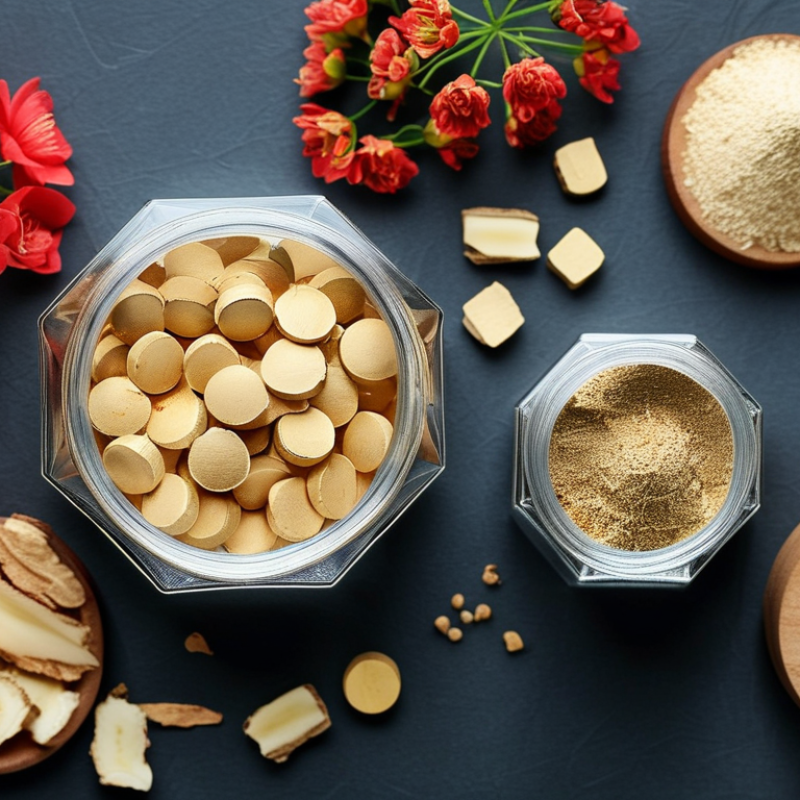
Hair growth pills are oral products designed to support follicle activity, correct nutrient deficiencies, or influence hormone-related hair loss. They do not all work through the same pathway. Some provide iron, zinc, vitamin D, protein components, or biotin. Others contain prescription ingredients that require medical supervision.
The American Academy of Dermatology reports that low iron, zinc, protein, or biotin can contribute to noticeable shedding. However, supplementation usually helps only when a deficiency exists. The NIH Office of Dietary Supplements lists 30 micrograms as the daily adequate intake for biotin in adults. Biotin deficiency remains uncommon. High-dose biotin may also interfere with certain laboratory tests, according to the U.S. Food and Drug Administration.
The mechanism matters more than the capsule shape. Nutrients may support keratin production and normal follicle cycling. Hormone-targeting medicines may reduce androgen activity in genetically sensitive follicles. Evidence is uneven.
A 2023 systematic review in JAMA Dermatology found that many oral hair-loss treatments still need stronger, longer-term clinical studies. I would not treat a glossy label as proof.
Hair changes are slow, often requiring several months of observation. A dermatologist can review scalp patterns, medication history, diet, and blood tests before selecting an oral treatment. Personal experience can mislead here. Less shedding does not always mean new growth.
Evaluating China’s top hair growth pill manufacturers requires more than comparing prices or polished websites. Start by checking whether the facility follows recognized GMP standards and permits independent audits. Ask for the manufacturing license, recent inspection records, and batch-level certificates of analysis. These documents should identify ingredient strength, microbial limits, heavy metals, and testing methods.
A reliable manufacturer explains where each botanical, vitamin, or mineral comes from. Traceability should reach the original supplier, not stop at a warehouse. Review stability data from real storage conditions, such as 25°C and 60% humidity. Packaging should protect capsules from moisture and heat. Request samples from different batches, then compare color, odor, weight, and laboratory results. Small inconsistencies matter.
Scientific support also deserves close attention. Separate human clinical evidence from laboratory studies or marketing language. A responsible supplier avoids guaranteed regrowth claims and provides clear dosage information, warnings, and adverse-event procedures. Check whether the manufacturer can support legal labeling in the target market. Communication is evidence, too. Slow replies, missing records, or changing explanations should reduce confidence. Still, no checklist is perfect. A factory may pass an audit yet struggle with production delays or formulation changes. Put quality agreements, change-control rules, recall procedures, and delivery terms in writing before placing a large order. Clear records often reveal more than confident sales presentations.
A practical, company-neutral scoring framework for comparing hair growth pill manufacturers. The percentages represent recommended evaluation weights, not rankings of individual companies.
GMP compliance and independent testing should receive the highest priority because they support consistent production quality, ingredient identity, dosage accuracy, and product safety. Clinical evidence, regulatory documentation, traceability, and export readiness provide additional confidence during supplier evaluation.
China’s top ten hair growth pill manufacturers should be judged by evidence, not factory size alone. A credible shortlist includes producers of biotin and zinc tablets, iron capsules, collagen formulas, herbal blends, and customized private-label supplements. Other manufacturers focus on amino-acid complexes, vitamin D products, plant-based capsules, or combined mineral formulas. These products may support nutritional needs, but they cannot guarantee new hair growth.
Reliable manufacturers usually provide GMP production records, ingredient specifications, batch testing, and contaminant screening. They should also verify dosage accuracy, stability, packaging quality, and compliance with applicable Chinese and export-market rules. A buyer should request certificates from independent laboratories, not rely only on promotional claims. Some suppliers offer small-batch development, tablet coating, child-resistant packaging, and multilingual documentation. Practical experience matters here. A clear production sample often reveals more than a polished brochure.
This ranking is not perfect. Public factory data can be incomplete, and “top ten” may change with audits, capacity, and product performance. Hair loss also has many causes, including nutrient deficiency, illness, stress, and medication use. Professional review is sensible before choosing iron or hormone-related products. Manufacturers should avoid disease-treatment promises and disclose contraindications clearly. The strongest partners communicate limits instead of selling certainty.
When comparing China’s top 10 hair-growth pill manufacturers, buyers should verify quality beyond attractive certificates. WHO’s 2023 Global Traditional Medicine Report states that 170 countries use traditional medicine. This broad market increases the need for consistent testing. Check whether each facility follows GMP requirements and holds a valid manufacturing license. ISO 22000 or HACCP can support food-safety controls. However, certification alone proves little about every batch.
Request a recent Certificate of Analysis for finished products. It should show active ingredients, dosage accuracy, heavy metals, microbes, pesticides, and solvents. Independent laboratory testing is stronger than an internal report. Buyers should also review stability data, batch-traceability records, complaint handling, and product-recall procedures. The 2022 ISO Survey recorded more than 1.2 million ISO 9001 certificates globally, yet ISO 9001 does not guarantee hair-growth performance. That distinction is easy to miss. A polished audit file may still hide weak supplier controls.
Tips: Ask for three consecutive batch reports. Confirm test methods and laboratory accreditation. Check whether the label matches the formula. Review claims against destination-market rules, including FDA 21 CFR Part 111 or applicable European requirements. Avoid suppliers promising guaranteed regrowth. Hair loss can involve nutrition, hormones, genetics, or illness. Evidence for many supplement ingredients remains limited, and small clinical studies may not predict real-world results. A cautious buyer should accept some uncertainty, rather than reward confident marketing.
| No. | Manufacturer Type to Screen | Primary Quality Standard | Safety and Testing Evidence | Certification or Registration to Verify | Buyer Checkpoint |
|---|---|---|---|---|---|
| 1 | Finished-dose supplement manufacturer | Documented GMP system for dietary supplement manufacturing | Identity, purity, strength, composition, and contaminant testing for each relevant ingredient or batch | Applicable Chinese food or health-food manufacturing permit; third-party GMP certificate if offered | Confirm the certificate applies to the actual facility and product category, not only to a trading company |
| 2 | Manufacturer serving the United States | U.S. dietary supplement cGMP requirements under 21 CFR Part 111 | Written specifications, master manufacturing records, batch records, deviation control, and laboratory results | FDA food-facility registration where applicable; registration is not the same as FDA product approval | Do not accept “FDA approved” claims for a dietary supplement unless a specific legal basis supports the statement |
| 3 | Manufacturer exporting to the European market | Food-supplement hygiene and food-safety controls appropriate to the destination country | Testing for microbiological limits, heavy metals, pesticide residues, and prohibited substances where relevant | ISO 22000 or FSSC 22000 may support food-safety management; verify destination-country compliance separately | Check whether ingredients and claims comply with the regulations of the exact importing country |
| 4 | Botanical-ingredient specialist | Raw-material qualification and botanical identity-control procedures | Botanical identity, marker-compound or active-constituent testing, adulteration screening, and origin records | Supplier approval records and recognized laboratory reports; organic certification only when specifically relevant | Ask whether the botanical is standardized and whether the declared extract ratio is supported by documentation |
| 5 | Private-label capsule or tablet manufacturer | Controlled formulation, labeling, packaging, and change-management processes | Pre-production sample approval, finished-product testing, packaging compatibility, and shelf-life evidence | ISO 9001 can indicate a quality-management system but does not replace product-specific GMP | Ensure the approved formula, label, allergen statement, and batch specification match the final shipment |
| 6 | Manufacturer with in-house or qualified laboratory access | Validated or verified analytical methods and controlled laboratory procedures | Certificates of analysis showing test methods, specifications, results, units, batch number, and approval status | ISO/IEC 17025 accreditation is relevant to laboratory competence when the specific tests are within scope | Verify the laboratory’s accreditation scope; an accreditation logo alone does not validate every test |
| 7 | Manufacturer handling allergen-sensitive formulations | Allergen-control, sanitation, segregation, and cross-contact prevention program | Allergen risk assessment, cleaning verification, supplier declarations, and accurate label review | HACCP or ISO 22000 certification may support hazard-control procedures | Review shared-equipment controls and confirm the allergen statement for the destination market |
| 8 | Manufacturer using imported or high-risk raw materials | Traceability and supplier-qualification system covering the complete supply chain | Country-of-origin records, supplier audits, incoming inspection, quarantine, release, and recall procedures | HACCP, ISO 22000, or equivalent documented food-safety controls, subject to audit verification | Request a mock recall or traceability exercise demonstrating one-step-back and one-step-forward tracking |
| 9 | Manufacturer producing tablets or hard capsules at scale | Process controls for weighing, blending, compression or filling, coating, and packaging | Weight variation, disintegration or dissolution where applicable, moisture, microbial, and visual-quality checks | Facility GMP audit report and current manufacturing authorization for the relevant dosage form | Check batch-size capability, equipment suitability, in-process controls, and documented line-clearance procedures |
| 10 | Manufacturer with mature post-market support | Complaint handling, adverse-event monitoring, corrective action, and recall management | Written complaint investigation, retain samples, trend analysis, CAPA records, and documented recall contacts | Current audit reports, quality agreement, and evidence of regulatory inspection history where legally available | Require a signed quality agreement that defines specifications, release responsibilities, deviations, and notification timelines |
Note: Certifications and registrations should be independently verified through the issuing body, the relevant regulator, or an on-site/third-party audit. A certification does not automatically prove that a specific hair-growth product is effective or legally approved for every market.
Choosing a Chinese manufacturer requires more than comparing prices. Check whether the facility follows documented quality systems and maintains clear production records. Request current certificates, batch records, ingredient specifications, and recent laboratory reports. Testing should cover identity, microbial limits, heavy metals, pesticides, and product stability. A certificate of analysis alone is not enough.
Ask where each botanical, vitamin, or mineral comes from. Reliable suppliers should explain their traceability process and provide samples from regular production, not only polished showroom samples. Review minimum order quantities, lead times, packaging options, and change-control procedures. A small pilot order can reveal communication gaps, inconsistent tablet weight, or weak packaging seals. These details matter.
Consider an independent factory audit. An experienced auditor can inspect sanitation controls, warehouse conditions, calibration records, and employee training.
The manufacturer should also help prepare documents for your destination market, while your regulatory adviser confirms the final requirements. Do not accept promises about guaranteed hair growth. Evidence for ingredients varies, and permitted claims differ across countries. A professional supplier will discuss limitations clearly.
Price still matters. It should never replace verification. One overlooked issue is post-production storage; heat and humidity can affect quality before shipment. Build written specifications, complaint procedures, and recall responsibilities into the contract. The best partner may not offer the lowest quote. It should offer consistent evidence.